
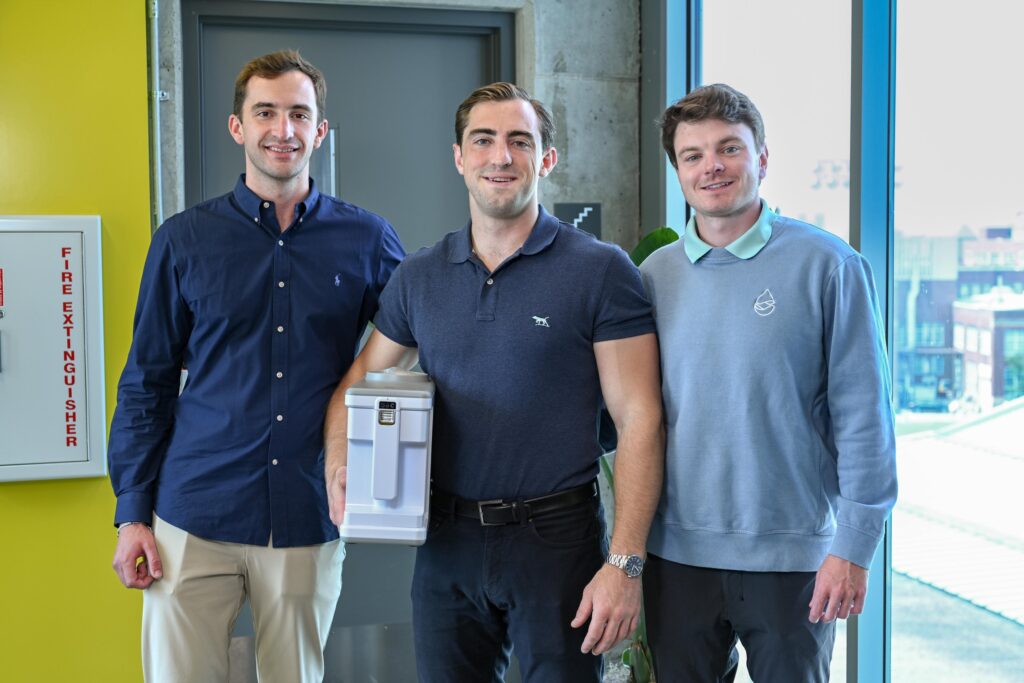
GKD Group, a world-leading mesh filtration manufacturer and CLEANR, a developer of advanced microplastics filtering technologies, have teamed to help washing machine manufacturers meet new and emerging regulations aimed at eliminating plastic microfiber pollution in global waterways, ecosystems and food chains.
The companies will collaborate in the development, engineering and manufacturing of CLEANR’s, solutions, which efficiently filter microplastics (particles smaller than five millimeters, or one-fifth of an inch, in length) from residential, commercial and industrial washing machine wastewater.
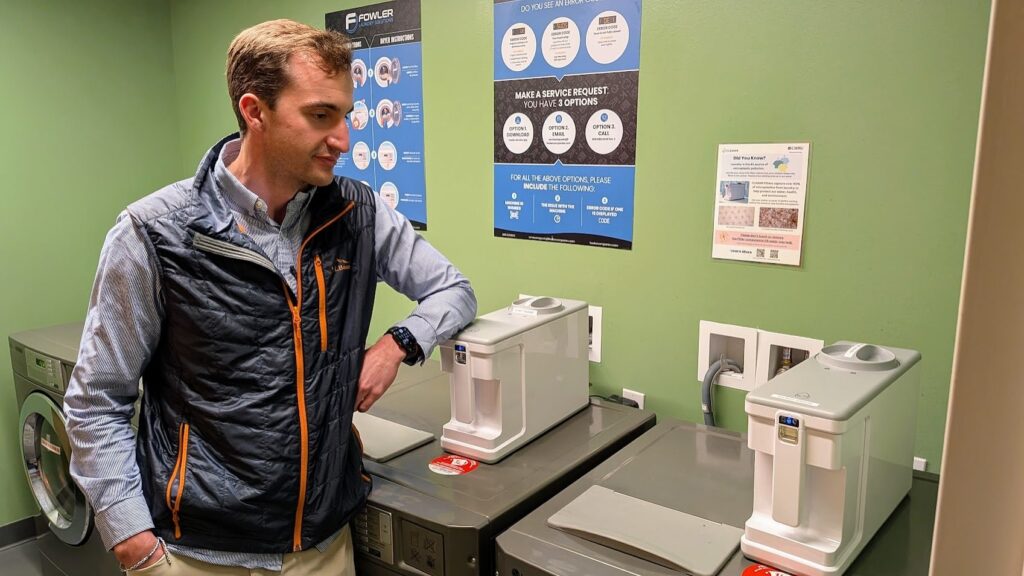
CLEANR’s unique patent-pending technology can be applied as an external filter or readily integrated into modern washing machine designs as a pre-installed solution. The technology has been shown to capture over 90% of microplastic fibers larger than 50 microns in size – outperforming any major solution in the market. CLEANR also offers a consumer-friendly dry disposal mechanism that prevents hands-on contact with microfiber waste and prevents waste from being washed down the drain.
“Washing-machine manufacturers around the world are facing growing demand for consumer-friendly, cost-efficient microplastic filtering solutions to address pending regulations in Europe, North America and beyond,” said Max Pennington, CLEANR CEO. “Our partnership with GKD ensures the highest quality and precision manufacturing capabilities for our clients, along with GKD’s 100-year track record of woven mesh innovation. Our two companies are bound by a shared vision of creating a safer and healthier world by tackling the global microplastics problem at its primary source.”
Over a half-million tons of plastic microfibers spill into the oceans every year in the form of washing machine wastewater. This accounts for 35% of all microplastics in the environment, making clothing and textiles the world’s number-one source of microplastic pollution. Over the past decade, an alarming body of evidence has emerged regarding the impacts of microplastic pollution on waterways, ecosystems, food chains and human health. Research[i] has shown that:
Microplastics now cover 88% of the ocean’s surface and have been identified in areas as remote as the beaches of the Arctic and Antarctic, the summit of Mount Everest and the bottom of the Mariana Trench.
On average, humans ingest a credit-card size amount of plastic every week, according to a study published by WWF International, causing microplastics to enter our circulation systems, tissue, and even placenta. One recent study discovered the presence of microplastics in the blood of nearly 80% of human test subjects.
·The effects of microplastic pollution on the health of wildlife, aquatic organisms and humans is not well understood. But studies have found evidence that high levels of exposure to microplastics and certain types of polymers may lead to lower feeding efficiency and growth rates, tumor promotion, endocrine disruption, liver toxicity, physical deterioration, autism spectrum disorder and even higher rates of mortality.
Without intervention, current levels of global microplastic pollution are set to rise dramatically over the coming decades. Recent research from the Organization for Economic Cooperation and Development (OECD) indicates that the accumulation of plastic waste emitted from clothing and other textiles is on course to double by 2050.
“Microplastic pollution is becoming an urgent environmental and public health concern,” said Dr. Stephan Kufferath, GKD Group CSO. “But microplastic filtering of washing-machine wastewater is a game changer. That is why we’re so keen to help CLEANR achieve its market potential by leveraging our innovative microplastic stainless-steel mesh and our long-established network of global manufacturing and distribution centers. This is an opportunity to help deliver the first filtration solution that actually meets upcoming regulatory requirements for Europe and beyond.”
A number of large governments are studying the problem and developing new rules to curb the flow of plastic microfibers from washing machines into waterways. Beginning in January 2025, France will require all new washing machines sold in-country to include a microplastic-filtration solution. Meanwhile, members of the UK parliament, California, Illinois, and Oregon state legislators in the U.S., and provincial legislators in Ottawa, Canada are working through similar proposals, with other governments around the world following suit. This fall, the state of California will begin a pilot test for microplastics in its drinking water, and New Jersey is working through a proposal to provide rebates of up to $100 to residents who purchase microfiber washing-machine filters.
“The growing focus on microplastic pollution by consumers, governments, healthcare organizations and manufacturers of textiles, apparel and appliances has created a dynamic market with potential to achieve rapid change,” said Terry Moore, chairman of CLEANR’s board of directors. “By closely collaborating with washing-machine manufacturers and global leaders like GKD, CLEANR will help overcome the world’s number one source of microplastic pollution, while driving growth for our clients and shareholders.”
About GKD Group
GKD Group is a leading provider of technical woven solutions for industries and architecture. It develops and manufactures customer-specific technical woven solutions and innovative procedures for processing wire meshes for more than a dozen industries. Headquartered in Düren, Germany GKD Group has been creating high-performance, application-specific mesh designs for nearly a century, and has more than 900 employees, with production sites and branches in Germany, the United States, Chile, South Africa, India, China, France, Spain and Dubai. www.gkd-group.com
About CLEANR
CLEANR, Inc. builds best-in-class microplastic filters for washing machines that effortlessly remove the largest source of microplastics in the environment. Its technology represents a breakthrough in microplastics filtration, with a patent-pending design that is inspired by nature and proven to outperform conventional filtration designs by over 300%. The company is building a platform filter technology that enables product manufacturers and business customers to materially reduce their microplastic emissions from impacted fluid streams, including residential and commercial washing machine wastewater, in-home water systems, tire particles in runoff water, textile manufacturing effluents, industrial wastewater, fisheries discharge, and other sources. www.cleanr.life
[i] “Primary Microplastics in the Oceans,” (Page 9) International Union for Conservation of Nature (IUCN), 2017 (https://bit.ly/3LRxYWc); “Policies to Reduce Microplastics Pollution in Water,” (Section 1.5) OECD, 2022 (http://bit.ly/40gsBUF); “Assessing Plastic Ingestion from Nature to People,” (Page 7) University of Newcastle Australia, 2019 (https://bit.ly/3K6SdOk); “Plastic Debris in the Open Ocean,” (Page 10240) Proceedings of the National Academy of Sciences, 2014 (https://bit.ly/3K2xivD); “White and Wonderful? Microplastics Prevail in Snow from the Alps to the Arctic,” (Page 1) Science Advances, 2019 (https://bit.ly/3ni1bPR); “Campaigners Call For Microfibre Filters To Be Mandatory In New Washing Machines,” Forbes, May 30, 2022 (http://bit.ly/40c17zu); Pre/post-natal Exposure to Microplastic as a Potential Risk Factor for Autism Spectrum Disorder,” (Page 1) Environment International, 2022; “Global Plastics Outlook,” (Figure 4.1 source data) OECD, 2022 (https://bit.ly/3FKUE6j)
Contact:
More on CLEANR

- CLEANR
- CLEANR
- CLEANR